Cybersecurity shares climbed sharply in afternoon trading as Wall Street's rotation out of semiconductor stocks and into software companies gathered pace, fueled by a new industry push to secure autonomous artificial intelligence agents before they become a liability for corporate networks.
Money Moves From Chips to Software
The broader trade driving Thursday's gains is not new, but it has hardened into something closer to a durable pattern. As CNBC has reported, investors are growing wary of the enormous capital outlays required to build AI infrastructure, along with the debt financing many hardware companies have taken on to fund it. Software and security platforms, by contrast, tend to generate cash more reliably and carry far lighter capital burdens. Yahoo Finance noted that this dynamic positions application and security providers to absorb a growing share of corporate technology budgets as companies move from experimenting with generative AI to actually running it across their operations.
A New Blueprint for Securing AI Agents
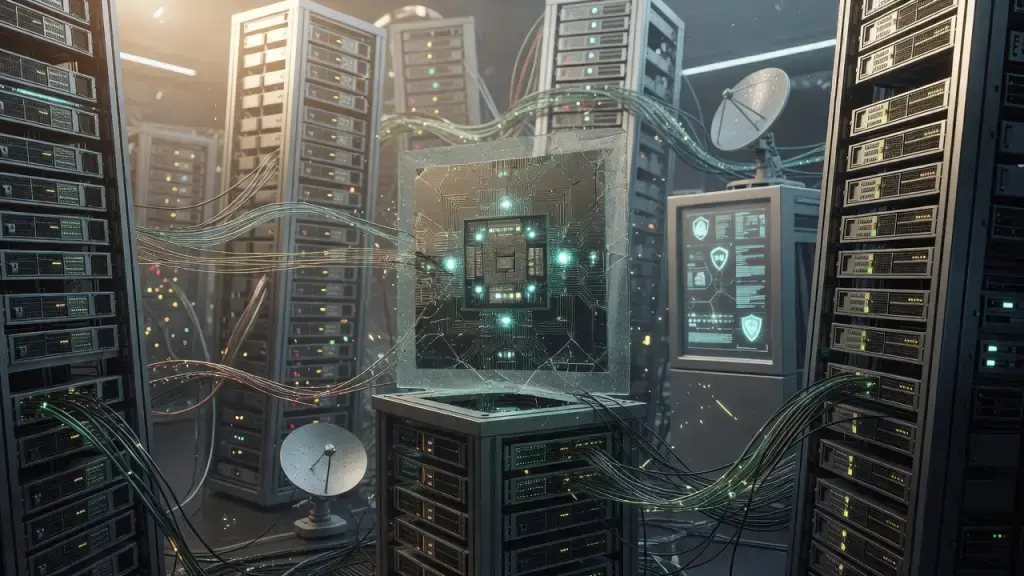
The specific spark behind Thursday's move came from Nvidia, which used its GTC Berlin conference to unveil what it calls the OpenShell Reference Architecture, according to the company's own newsroom. The framework is designed to standardize how enterprises protect autonomous AI agents - software systems built to carry out multi-step business tasks without constant human oversight. That autonomy is precisely what makes them risky: an agent empowered to move data, approve transactions, or modify systems on its own also represents a new entry point for attackers if it is compromised or manipulated.
Yahoo Finance reported that three established security vendors moved quickly to align with the new architecture. CrowdStrike said it is integrating its Falcon platform directly into the OpenShell runtime, aiming to detect and halt rogue agent behavior at the infrastructure level within milliseconds. Okta, in a joint announcement, described plans to extend identity and access controls to AI agents themselves, applying the same least-privilege principles long used to limit what human employees can access. Zscaler's parallel commitment reinforces how central zero-trust network architecture - where no device or user is trusted by default - has become to enterprises trying to scale AI deployments without multiplying their exposure to breaches.
What the Market Reaction Reveals
Zscaler shares rose 6.3 percent and Tenable, which specializes in vulnerability management, gained 5.2 percent. Given that Zscaler has recorded 35 moves greater than 5 percent over the past year, Thursday's jump suggests investors view the AI-security announcement as meaningful rather than transformative - a sign that the market already expects security vendors to adapt to emerging agentic AI threats rather than treating each such announcement as a surprise.
The move also follows a sharp reversal. Five days earlier, Zscaler fell 6.8 percent amid a sector-wide sell-off that CNBC said wiped out more than a trillion dollars in value from major semiconductor and AI-related stocks, as investors grew anxious about financing costs and elevated interest rates. That anxiety briefly pushed capital into Treasurys, pulling the 10-year yield toward 5.09 percent, even as it underscored a broader worry: if AI infrastructure spending slows because financing becomes too expensive, the ripple effects could slow economic growth more broadly.
The Longer View
Zscaler remains up just 3.8 percent for the year and trades nearly 32 percent below its 52-week high of $336.27, reached in November 2025. An investment of $1,000 made five years ago would today be worth roughly $749 - a reminder that even companies at the center of a favorable thematic shift can deliver uneven long-term returns. The underlying question for cybersecurity investors is whether demand for agent-level protection becomes a durable new revenue category, or simply the latest narrative in a sector already prone to dramatic single-day swings.